Breaking News
Showing posts with label TECHZONE. Show all posts

Friday, April 25, 2014

Can you Answer ?:"The best job interview questions from Microsoft, Google… and IKEA"


These are some Questions asked by Google,Microsoft and IKEA

TRY TO ANSWER THEM IN THE COMMENTS.


Questions by Google

  1. How many golf balls can fit in a school bus?
  2. You are shrunk to the height of a nickel and your mass is proportionally reduced so as to maintain your original density. You are then thrown into an empty glass blender. The blades will start moving in 60 seconds. What do you do?
  3. How many piano tuners are there in the entire world?
  4. In a country in which people only want boys, every family continues to have children until they have a boy. If they have a girl, they have another child. If they have a boy, they stop. What is the proportion of boys to girls in the country?
  5. Describe a chicken using a programming language.

Questions by Microsoft

  1. You have a bucket of jelly beans. Some are red, some are blue, and some green. With your eyes closed, pick out 2 of a like color. How many do you have to grab to be sure you have 2 of the same?
  2. Pairs of primes separated by a single number are called prime pairs. Examples are 17 and 19. Prove that the number between a prime pair is always divisible by 6 (assuming both numbers in the pair are greater than 6). Now prove that there are no ‘prime triples.’
  3. Imagine an analog clock set to 12 o’clock. Note that the hour and minute hands overlap. How many times each day do both the hour and minute hands overlap? How would you determine the exact times of the day that this occurs?
  4. How much does a 747 weigh?
  5. Imagine a disk spinning like a record player turn table. Half of the disk is black and the other is white. Assume you have an unlimited number of color sensors. How many sensors would you have to place around the disk to determine the direction the disk is spinning? Where would they be placed?

And this is how IKEA does it…

Since we are based in Sweden, we thought that some local inspiration would be in place and had a look at IKEA job interview questions. This must clearly be how they handle their interviews… :)
IKEA job interview joke
Read more ...

Ten Things You Didn't Know About Microsoft

Did you know that Bill Gates was arrested for running a red light?
Microsoft is undoubtedly the number one software company in the entire world and although it makes serious efforts to evolve beyond the software world, everyone will still call it “the Windows maker.”

The Redmond-based company currently has nearly 95,000 employees and with Nokia's takeover that was completed today, its workforce exceeds 120,000 people worldwide. That's indeed impressive, but it's no surprise that a company so large has millions of users and fans in every single country out there.

Many of you already know most or at least part of Microsoft's history and you definitely know how the company came to be, but there still are a few things that you never heard about. That's the purpose of this article: to reveal ten less-known facts about the company that continues to power approximately 90 percent of the desktop computers worldwide.

#1: Founder Bill Gates was arrested several times

Although he's one of the world's leading philanthropists, Bill Gates, Microsoft co-founder and one of the richest men in the entire world, was arrested several times when he was younger.

The first time he got arrested was in 1975 when the police pulled him over for speeding and driving without a license. Two years later, he was arrested once again, this time in Albuquerque for running a red light and, again, for driving without a license. Finally, in 1989 when he was already the boss of the software company Microsoft, he was arrested with charges of driving under the influence. 

Bill Gates is now a role model for everyone, as he spends most of the time working for his charity, while also investing part of his fortune for developing vaccines supposed to cure a number of diseases in poor countries on the African continent.

Review image


#2: Microsoft employees eat a lot of pizza

If you're wondering what is the favorite food of the average Microsoft employee, the answer is as simple as it could be: pizza. Microsoft's workers are eating quite a lot of pizzas every year and the company has every reason to be proud of this.

According to the Microsoft by the Numbers page, company employees are eating no less than 554,000 pizza slices and an additional 250,000 personal-sized pizzas every year. 

Sandwiches are also among the favorite “dishes” of Microsoft employees, as one million sandwiches are eaten every 12 month in campus cafeterias. “The most popular sandwich is the turkey club – 225,000 are eaten annually,” the company says.

#3: Free drinks for the win

After eating so many pizzas, Microsoft employees obviously need to keep themselves hydrated, so they're drinking quite a lot of beverages. That shouldn't be a problem, though, because Microsoft is offering all drinks free of charge.

According to statistics, Redmond employees are drinking 2.6 million gallons of free beverages per year, out of which 40 percent is Coke Zero. Without sugar that is.

Review image


#4: M&M for every single anniversary

You eat a pizza, drink some Coke, but what's for desert? The right answer would be M&M, but only if it's someone's anniversary.

Microsoft's employees are celebrating their anniversaries by bringing in lots of M&M. Workers who have posted on their blogs such news said everyone needs to bring one pound of M&M for each year spent within the company, so in case you've been with Microsoft for the past 8 years, you have to buy no less than 8 pounds of M&M. Whatever flavor you wish.

#5: The Redmond campus is full of bunnies

Like Easter eggs in Microsoft's products? So do we, but it turns out that the company might not be so excited when hearing about the Easter tradition.

It appears that the Redmond campus is actually full of bunnies and the company one time had to ask the local authorities to help control the bunny population. According to some unofficial sources, it all began during the '90s when someone near the campus abandoned lots of bunnies who obviously reproduced like... bunnies, so they quickly became a problem for everyone.

The population has already been reduced, but it seems that bunnies are still everywhere you look in the Redmond campus.

#6: Windows was first called “Interface Manager”

We all know that Microsoft's operating system is called Windows, obviously because it has... err... windows, but there was a time when Bill Gates and Paul Allen were considering a different name.

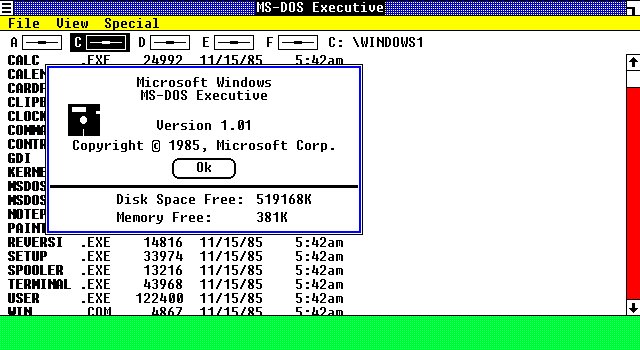
The first Windows version, simply called Windows 1.0, was launched on November 20, 1985, and Bill Gates wanted to retail it as “Interface Manager.” The reason was pretty obvious, as the new operating system was more like an interface that allowed users to manage files. Of course, it was still based on MS-DOS, but it was still bringing some improvements.

Rowland Hanson, the head of marketing at Microsoft, was the one who brought up the idea of “Windows” as the name of the operating system, pointing out that such a designation would help sell the product better.

Review image


#7: Bill Gates never wanted a 32-bit operating system

Microsoft's co-founder, then CEO, now technical adviser, Bill Gates said during the '80s that “we will never make a 32-bit operating system.” While he seemed very serious about it at that time, Microsoft rolled out Windows NT, a 16- and 32-bit based operating system in 1992, approximately 10 years after the made this statement.

Of course, the company continued to develop 32-bit editions of Windows, so all successors had such versions, including Windows XP, Vista, 7, 8, and 8.1.

At this point, 64-bit versions of Windows are indeed selling better, but there's no doubt that this was one of Bill Gates' bad predictions.

#8: 75 percent of the employees are men

As mentioned in the beginning of the article, Microsoft has nearly 94,000 employees worldwide and with the acquisition of Nokia, the company also adds another 25,000 people to its workforce.

Although more women are taking over top jobs in the tech industry (see Marissa Mayer at Yahoo), 75 percent of Microsoft's employees are men and the company doesn't seem to have any problem with it.

Of course, there are several successful women within the company, including Julie Larson-Green who was at some point chief of the Windows division (after the departure of Windows boss Steven Sinofsky).

Review image


#9: Weird interview questions for Microsoft jobs

Getting a job at Microsoft shouldn't be too difficult if you have the necessary skills, but it turns out that candidates have to answer some pretty difficult questions during the interviews.

For example, we've heard from candidates that the employer was asking why the manhole covers are actually round, while others were trying to find out how much a 747 aircraft really weighs.

And that's not all. Here's one of the questions asked during an interview for a job at Microsoft (credits go to pingdom.com):

“You have a bucket of jelly beans. Some are red, some are blue, and some green. With your eyes closed, pick out 2 of a like color. How many do you have to grab to be sure you have 2 of the same?”

#10: Apple sued Microsoft in 1983 for stealing its drop-down menus

Microsoft and Apple are still fierce rivals these days, but in 1983 the fruity-named company was ready to move the dispute to the court.

At that time, Steve Jobs, CEO of Apple, was upset that Microsoft's new Windows 1.0 has too much of the look and feel of the MacIntosh and was ready to sue the software giant for stealing his fonts and drop-drown menus.

Bill Gates, however, defended the UI of his operating system by explaining that he used the design from Xerox, but eventually decided to abandon some of the elements he used in Windows 1.0 to avoid a legal dispute.
Read more ...

OPPO “Smart Lens” camera attachment leaks


It appears as if OPPO will be the next smartphone maker to push out a camera lens attachment. The OPPO offering sounds, and looks familiar to what we saw coming from Sony with the QX series. Images of the NFC powered Smart Lens setup have recently surfaced on Weibo.

While the images are new, this isn't the first time we have heard of a detachable lens setup from OPPO. In fact, there has been rumors floating around since September. The images clearly show the "Smart Lens" branding, as well as an NFC logo. We can also see the lens will have WiFi and feature a 10x zoom.


The power button also suggests the lens will be self-powered, which could be both a plus and minus. This ultimately means another device to keep charged, but it also suggests it could be used independently. These leaked pics show the lens attached to a Find 7. The clip looks fairly standard, almost as if this will be able to attach to a variety of devices, but beyond what we can see from these images -- device support is an unknown.


We aren't able to see from this series of images, but some of those earlier rumors were hinting there would be a memory card slot. Remaining, and still unconfirmed details included mention of a 16 megapixel camera and image stabilization. So far, no confirmation from OPPO, however given these images are out, we are hoping to see something soon.
Read more ...

Windows Phone surpasses BlackBerry in the USA in Q1 2014, Android still king

Microsoft's mobile platform, Windows Phone, has finally seen some increase in its market share in the USA during Q1 2014 – it has grown 1% and now holds... 3% of the market. Still, it appears that this leap was more than enough for it to overtake BlackBerry's own eponymous OS, which now runs on no more or less than 2% of all smartphones in the country. Interestingly, BlackBerry OS had 3% of the same market, whereas Windows Phone held 2% several months ago.


These interesting facts were revealed by Nielsen, a global research agency, which surveyed over 20,000 mobile subscribers in the USA on the matter.

It comes to almost no surprise that Apple is still the dominant player and holds the lion's share of the smartphone market at home. Cupertino's smartphones have been chosen by 42.5% of the surveyed respondents, however, iOS is still losing the battle against Android – Google's operating system runs on the devices of 52% of all respondents. 

If we turn our heads to Androidland, we will barely find anything surprising at all. Nielsen's report shows that more than half of all Android smartphones had the Samsung logo on their front – 28.7%. LG is far behind – with 7% of the market, the other South Korean maker gets the silver medal. Motorola is breathing down LG's neck with 6.8%, while HTC is responsible for 5.7% of all Android devices on the US market in Q1 2014.

Read more ...

The UK will be the first to break even with fusion power, leading us towards a future of clean, infinite energy


The JET tokamak reactor
The world’s best fusion reactor, situated in the heart of the merry,Hobbit-inspiring motherland of Oxfordshire in England, will soon attempt to become the first fusion power experiment to surpass the mythical “break-even” point. This experiment, known as the Joint European Torus (JET), has held the world record for fusion reactor efficiency since 1997 despite the USA’s recent laser-based fusion experiments at the National Ignition Facility. If JET can reach break-even point, there’s a very good chance that the massive ITER reactor currently being built in France will be able to obtain the holy grail of everlasting green power generation: self-sustaining fusion.
Way back in 1970, the European Community (a precursor to the European Union) decided that fusion power should be taken seriously. In 1977, after lots of planning, construction of the JET began at a former Royal Navy airfield near Culham in Oxfordshire. Rather uniquely for an advanced science experiment, JET was actually finished on schedule in 1983, and was officially opened in 1984 by fair old Blighty’s Supreme Leader Queen Elizabeth II. In 1997, 16 megawatts of fusion power was produced from an input power of 24 megawatts, for a fusion energy gain factor (usually expressed by the symbol Q) of around 0.7. No other fusion reactor, including the National Ignition Facility in California, has come close. (The NIF is hampered by the fact that its its ignition method — 500 terrawatts of laser power — is incredibly inefficient.)
The target chamber at the National Igniftion Facility, where 192 lasers combine to create fusion
The fusion chamber at the National Ignition Facility in California. Fusion reactors look pretty awesome, eh?
While JET itself is a fairly low-power experiment (38 megawatts), it’s still very exciting because it’s essentially a small-scale prototype of the massive (500 megawatts) ITER fusion reactor being built in France that will (hopefully) fuse deuterium-tritium (D-T) fuel by 2027. Over the last few years, JET has been upgraded with the ITER-Like Wall (yes, that’s its scientific name) — basically a wall of solid beryllium that can withstand being bombarded by ultra-high-energy neutrons and temperatures in excess of 200 million degrees.
NSTX internal
Another fusion chamber, this time the NSTX at Princeton. Click to zoom in.
With this new wall in place, the scientists at JET think they’re ready to throw some D-T fuel into the tokamak, pump up the magnetic field, and pray that more energy is released from the fuel than was put in to start the reaction. The key to sustained fusion is keeping the plasma hot and focused — and a big part of that is using a wall that bounces the hot neutrons back into the reaction, rather than letting them escape and thus losing energy and heat to the environment.
After years of working with just deuterium, JET is now ready to use a deuterium-tritium fuel mix that will burn a lot hotter and have a better chance of reaching break-even. When ITER comes online in the 2020s, it will use a D-T fuel mix. Speaking to the BBC, JET director Steve Cowley said, “We hope in the next runs of Jet that we’ll approach a [fusion energy gain] of one.” (Q = 1). For self-sustaining fusion that can be harnessed for energy production, though, we need to reach a Q of 20 or more — we need a confinement method (magnets, walls) that is so good that very little external energy is required to keep the fusion reaction going. ITER is aiming for a Q of 5 or 10 — and if it proves to be successful, say in 2030 or so, then maybe we’ll finally be ready to produce a real fusion power plant.
Read more ...

Samsung “Crystal Collection” Galaxy S5 revealed


We may still be following rumors for the Galaxy S5 Prime, however it looks like Samsung does have some special models in the works. The Galaxy S5 "Crystal Collection" handset was recently revealed by way of a short YouTube teaser. The video is just 12 seconds in length and shows a Galaxy S5 that is covered with crystals.

In this case those would be Swarovski crystals. Samsung has said the handset will be arriving in May, but so far we have yet to see anything in terms of market availability or pricing. But having said that, we aren't expecting this one to come cheap.

One hint does come with the YouTube channel this was posted on; Samsung Mobile Korea. This isn't the first time we've seen a crystal covered Galaxy device, and if we follow previous patterns -- we expect the availability to be limited. Samsung also didn't specify if, or how the specs would differ from the regular model Galaxy S5.


The overall design looks rather sparkly, but we have to look back towards the Galaxy S5 Prime as that is the one we are more interested in seeing. Recent rumors for the GS5 Prime suggest the handset will debut with a QHD display at 2560 x 1440. There was also talk of that handset being powered by the Exynos 5430 processor, which is ARM big.LITTLE and 64-bit
Read more ...

Why the display on the Samsung Galaxy S5 is so good ??

The Samsung Galaxy S5 has received high praise for its display. DisplayMate called it the best performing smartphone display that it has ever tested.On Wednesday, Samsung explained some of the technology that makes the display so good. For example, the screen eliminates excessive glare, the bane of all smartphone users, by constantly analyzing the display under changing lighting conditions. In addition the Super AMOLED screen produces 1.6 higher Ambient Color Gamut than LCD, which means that glare is not an issue when looking at the screen on a bright, sunny afternoon. Super dimming allows users to view their phone in the dark without getting eyestrain from a too-bright screen. You can view how the screen adjusts in the demo below.


Galaxy S5 Visibility and Adapt Display Demo
The Adapt Display changes the screen based on the surrounding lighting. For example, under blue-tinted lights, a normal screen looks yellow as your eyes adjust. Not with Adapt Display, which makes the screen look normal no matter what the surrounding lighting. This can be seen in the image below.


Two factors determine how vivid your screen is. One is the color gamut, and the other is contrast. Luckily for Samsung Galaxy S5 owners, the color gamut of a Super AMOLED screen is 1.4 times larger than what is found on a TFT LCD display. The contrast is 77 times higher than a TFT LCD screen. Samsung says that the Galaxy S5 can produce "richer and brighter" images that what is found on competitor's handsets.

Lastly, the Samsung Galaxy S5 screen has the fastest response time in the industry with a .01ms reading. That means the display does not lag, under all temperature conditions.

Those of you with the phone probably don't care about the technology involved. You're just happy with how sharp and lifelike the images are on the screen. But just in case you were wondering, these are a few of the features that Samsung says it is employing on this year's version of its flagship phone.


Two of the different modes available on the Samsung Galaxy S5, Professional and Dynamic

Read more ...

Gionee to set up 750 service centers across India by March 2015

Gionee started its operations almost a year back in India. Today it has announced that it will open more than 750 service centers across India by March 2015. The Chinese company recently unveiled world’s thinnest smartphone Elife S5.5 at Rs 22,999.


While our emphasis is on delivering best in class products always, we have laid equal emphasis on providing top class service right from the time we started business in India. Gionee established a Call Center with its very first sale and with our growing reach we are constantly strengthening our service network to ensure the comfort and trust of our existing and fast growing set of customers.said, Arvind.R.Vohra, Head – Gionee India.

Gionee says it has already opened more than 400 stores in India in mere one year of its operations. All of these stores are available across Tier I, II & III cities in the country. These service centers will boast of team of expert technicians and specially trained service advisors.

The company has mere 2 percent share in Indian smartphone market and has made Rs 500 cr in sale as per an ET report. Gionee says they ship 23 million handsets per year worldwide.
Read more ...

New 5.2-inch Motorola XT912A with Android 4.4.3


New 5.2-inch Motorola XT912A with Android 4.4.3 spotted in benchmark test?

Motorola already confirmed that it would introduce a second-generation Moto X (possibly called Moto X+1) later this year, plus other new smartphones, but it didn’t provide specific details regarding their specs - although we do know that they will offer a near-stock Android experience.

One of the company’s upcoming handsets might be the Motorola XT912A, which was spotted in a GFXBench test today (see the image on the left, and zoom in for a closer look). According to the benchmark test, the XT912A runs the latest Android 4.4.3, and sports a 5.2-inch display with 1080 x 1920 pixels. Other features seemingly include a 12MP rear camera, 2MP front-facing camera, quad-core Snapdragon 800 processor, 2GB of ROM, and 32GB of internal memory.

If the XT912A model number looks familiar it’s because the original Motorola Droid Razr (released by Verizon in late 2011) was - and still is - known as the XT912. Is this XT912A a new Verizon-bound handset? We can’t know for now. In any case, we must keep in mind that data revealed by benchmark tests isn’t always accurate, as these things can be easily faked. So the XT912A might end up being... nothing after all. Until some official details arrive (if ever), we have no choice than to remain skeptical about all this.
Read more ...

First New Apple Product for 2014 to Launch Next Week

MacBook Air
The Frenchies at MacG are citing reliable sources as saying that Apple will be announcing its first product refresh as early as next week. Don’t expect anything revolutionary, though. The source says it’s only an upgraded MacBook Air with a faster processor and maybe more storage.

Granted, a refreshed Mac is not an all-new product, but it is the first new thing out of Apple this year, so it counts. The upgrade will consist of a faster processor and extra storage for the base model, but the latter spec remains unconfirmed. In fact, both claims remain unconfirmed, but the former is more likely.

MacBook Air currently ships with 128GB of Flash storage as standard, which means Apple could theoretically double that amount next week. The upgrade would be senseless coupled with a price spike (since you can actually get a 256GB model for a few extra notes), so that’s pretty much out of the question.

Ming-Chi Kuo of KGI Securities issued a lengthy research note earlier this month projecting Apple’s entire roadmap for the year, including an all-new MacBook Air model boasting a 12-inch Retina display.

The analyst specifically said it would be “as portable as current 11-inch MacBook Air and productive as 13-inch MacBook Air,” adding that it would be thinner and lighter than the current lineup, featuring a new clamshell design.

The computer will “redefine laptop computing,” Kuo said, adding that it will sport an Intel processor, not an A8 chip as others have speculated. It’s also possible it will cost less than the current models, he added, which means you may want to hold out your purchase.

The iMac line of desktop computers should also receive a processor upgrade and perhaps more all-Flash configurations starting this year.

The MacBook Pro range of professional laptops will probably witness the discontinuation of the only remaining model that boasts an optical drive, while the Mac mini line will most likely get new chips too.

Having just refreshed the Mac Pro a few months ago, the most powerful computer in the entire Macintosh line is not expected to undergo any changes soon.

Some Macintosh upgrades will most likely be announced at the Worldwide Developers Conference in early June, so mark your calendars and keep a fair distance from those cash reserves. Next week’s upgrade may be the least important announcement of the whole year (if confirmed).
Read more ...

Raspberry Pi Clones

RPi clones
From the top: The Raspberry Pi, HummingBoard, and BananaPi.


Below is a comparison of the key differences between Raspberry Pi and its clones.
 Raspberry Pi Mod. CBanana PiHummingBoard
Processor700MHz, 1-core ARM111GHz, 2-core Cortex-A71GHz, 4-core Cortex-A9
RAM512MB1GB2GB
Ethernet10/10010/100/100010/100/1000
IR receiverNoYesYes
Comp. RCAYesYesNo
StorageSDSD, SATAMicroSD, mSATA
MicroUSB OTGNoYesNo
SPDIF digital audioNoNoYes
Mini-PCIeNoNoYes
Read more ...

Ubuntu 14.10 Named ‘Utopic Unicorn’


Utterly unsurpassed ungulates! Ubuntu 14.10 has been named the Utopic Unicorn!
Announcing the moniker on his blog in his traditional alliterative way, Canonical founder Mark Shuttleworth sets out the aim of the release
utopic-unicorn

What’s In a Name?

The word ‘Utopic‘ is derived from ‘Utopia‘ and is used to describe a community, society or project that has reached some a shared degree of progress or ‘ideal’. The Unicorn is an animal from mythology generally depicted as Equidae with a lone, long spiralled horn on their heads. 
Ubuntu 14.10 for servers and desktops is set for release in October 2014.
Read more ...

An amazing Chrome extension for modifying text in web images


Project Naptha

Project Naptha, a Chrome extension made by developer Kevin Kwok, uses optical character recognition technology whipped up by several sources—including Microsoft Research and Google—to automatically identify text in images on the web. The extension then gives you options to copy, translate or even modify the text, right there in your browser.
With Project Naptha, selecting text in images is as easy as highlighting words in, well, Word, and a simple right-click brings up the extension's options. Being able to copy text in imagery and paste it into a Google search or document seems like a highly useful feature indeed.
project naptha file access
Swing into the Chrome Web Store to pick up the extension, then head over to the Project Naptha website for the full backstory and—if you have the extension installed—a full demonstration of its abilities. Kwok hopes to expand the project to other browsers in the future.
Read more ...

Wednesday, April 23, 2014

Google Acquires Titan Aerospace Before Facebook Does


Google has bought Titan Aerospace. Yes, you heard that correctly.  The very same Titan Aerospace that Facebook wanted to acquire.  Google have snatched the firm right from under Zuckerberg’s nose.  Last month Facebook  was allegedly in talks to buy Titan Aerospace for approximately $60 million.  The disclosure of the amount that Google has paid is not public.
The WSJ has allegedly claimed Google want to boost their aerial technology, the company has consequently acquired Titan Aerospace, though the final purchase price has not been disclosed. This report further claimed that Titan Aerospace and its staff of 20 employees will stay in New Mexico, and Vern Raburn, chief executive officer, will continue to oversee the day to day running of the business.
Titan
We reported in early March about Facebook wanting to acquire Titan Aerospace for their latest purchase and TechCrunch reported that Facebook has planned to build 11,000 Solara 60 drones to offer Internet access in Africa. These drones would be classed as “atmospheric satellites” for monitoring weather, assisting in disaster recovery and offering communication capabilities.
If Facebook purchased Titan, it would see the social network rival Google’s Project Loon, which is aiming to offer Internet connectivity via air balloons. In addition to this, Facebook most probably wanted to further connect Africa, because of the newly acquired WhatsApp service.
Google however has seized Titan Aerospace first. The Wall Street Journal has said the Titan team would now work directly with Google’s Project Loon, thereby helping to build large, high-altitude balloons that send Internet signals to the offline world.
Titan’s drones are capable of collecting real-time, high-resolution images of the Earth. The technology also features atmospheric sensors and supports voice and data services. This also means Google could use them with Google Maps.  The Titan team may also work with Google’s Makani project, developing airborne wind turbines for energy efficiency.  I can see a future acquirement of Altaeros Energies may be in the pipeline, although the Makani project is similar, so who knows?
As always, if you would like to leave a sensible comment, then please do so in the comments section below.
Read more ...

Facebook Nearby Friends Track Feature


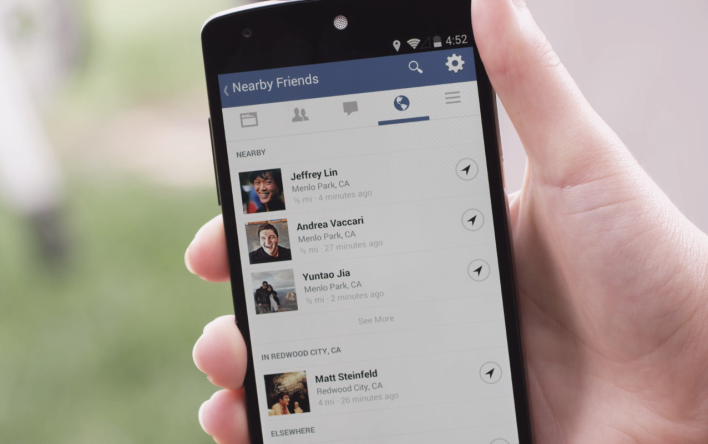
Facebook is introducing a new mobile feature called Nearby Friends. It can tap into the steady stream of location information that your phone gives out, so your friends will be able to track each other and thereby know where they are, in real time.

This new feature will not be switched on by default. Your Facebook friends will not be able to locate you, unless you decide the live-tracking feature is what you want. To turn it on, all you have to do is head over to Facebook’s settings. By making this new feature opt-in rather than auto on, it suggests Facebook has maybe learned from some of their previous errors regarding privacy problems.


The options for sharing your location details are varied; you can either share your general location with all your Facebook friends, just close friends or you can customize a list of people. It is interesting to note that your location is only shared with other friends who are using the feature as well and have chosen to share their location with you.

A push notification informs you of how many of your friends are nearby. If you open the app you see a list of friends, the area or town where they are and the distance they are from your current location. Nearby Friends will be available on Facebook’s iOS and Android applications, but as the feature is new and is still in its early stages, it will only work at select locations.


There are other apps that already include features that let people “check-in” to locations, such as Instagram but those location features are slightly different because you decide when to share each specific location. If you do decide to turn on the new Nearby Friends feature, Facebook will start to collect data on your exact location and they store details on the locations where you have been in the past. Of more of a concern is that the app also collects location information even when it is closed. You are able to turn off the location history in the app’s settings. It is even possible to delete individual locations from your history also.

What do you think? As always, if you would like to leave a sensible comment, then please do so in the comments section below.

[Image via occupycorporatism & businessinsider]

SOURCE: http://edition.cnn.com/2014/04/17/tech/mobile/facebook-nearby-friends/index.html?eref=mobiles_republic


Next StoryMom Creates UpSee Harness To Help Her Son Walk
Read more ...

Samsung Project KQ may be the premium Galaxy S5


Project KQ, which may also very well encompass the Galaxy F-line of products, sports a QHD (2560 x 1440 pixels) resolution on a 5.2" display. There's currently no information if it's going to be Super AMOLED.


In a traditional Samsung fashion, Project KQ is set to launch with a couple of different versions, each sporting a different chipset. The model destined for South Korea is going to pack the company's latest octa-core Exynos 5430 chipset. The new silicon features quad 2.1GHz Cortex-A15 and quad 1.5GHz Cortex-A7 cores in addition to an 600MHz ARM Mali GPU. There's also a new display controller to handle the QHD display.
A new HEVC video decoder is going to make 8K UHD playback possible, while a dedicated new audio co-processor, called the Samsung "Seiren", will handle sound encoding and decoding.
If that wasn't enough, the Exynos-based Project KQ will for the very first time utilize an Intel LTE modem (XMM7620). It packs quite a punch supporting speeds of up to 300Mbit/s down and 150Mbit/s up. Only the European version will get this LTE chip, while the Korean market will make do with a Samsung-made LTE modem codenamed Shannon 300 (SS300).
There's no word about the US market, but there is evidence that Samsung will utilize the quad-core Snapdragon 805 chipset in at least one version of the upcoming phone (G906S).
An interesting piece of information is that Samsung developed ten revisions of the Galaxy S5 until it was given the green light to enter production. The source of the information reveals that the first two packed QHD displays, which explains the rumors that were floating around before the actual announcement of the Galaxy S5.
Read more ...

Intel “Devil’s Canyon” CPUs Set for June 2 Launch


 - Intel Devil's Canyon launch date revealed

Intel has a number of K-class central processing units up for sale, with unlocked multipliers and, thus, overclocking support. We now know when Devil's Canyon will replace them though.

Intel has recently launched 44 new CPUs, the Haswell refresh as it were, but none of them, not the desktop and not the laptop chips, have unlocked multipliers.

That means that the company still has to release some replacements for the current processors with K suffixes.

After all, there can be no CPU generation without a bunch that can overclock like crazy. Hence the "Desktop Reinvented" strategy.

The Devil's Canyon set of LGA 1150 CPUs will cover that base. We still don't know how many of them there will be, or their actual specification, but we do now know when they will come out: June 2, 2014.

And they won't be alone. There will be some new Pentium chips coming out then as well, called Pentium Anniversary Edition. They, too, will have unlocked multipliers, as well as Quick Sync Video technology.

I'm not sure if the Pentium chips will have better thermal interface material (TMI). The Devil's Canyon definitely will though. The poor TMI of the first Haswell generation was a pretty big issue in the enthusiast community.
Read more ...

Opera 12 still gets updates check whats new !!!

Modern versions of Opera aren't affected by the bugsEnlarge picture - Modern versions of Opera aren't affected by the bugs
Opera 12.17 is now available for download for Windows clients, bringing a fix for the Heartbleed bug, but also some other improvements supposed to keep users on the safe side while browsing the web.

Opera said in a blog post that version 12.17 was specifically designed to block vulnerabilities that could allow Heartbleed attacks, but while fixing these issues, the developing team has also discovered another security glitch affecting the autoupdate engine on Windows.

“Successful exploitation, which would require using a third, unrelated bug on Windows, could allow a mischievous man in the middle to run arbitrary code on the computer. Opera 12.17 is therefore a recommended security upgrade on Windows,” Opera said in a blog post.

“While it is unlikely that someone has gained access to a certificate of ours, we cannot rule out that some foreign intelligence agency has done so, and we want to be on the safe side.”

Opera 12 running on Windows clients will automatically receive the new update, while Mac and Linux versions are not affected, the parent company guarantees.

Keep in mind that these security vulnerabilities only exist in Opera 12 on Windows versions, so in case you’re running the modern builds of the browser, you’re on the safe side and there’s no need to do anything to patch the application.
Read more ...

LG G3 Awesome UI Leaks


 - LG G3 UI (screenshot)

The first screenshot taken from the alleged LG G3 leaked several weeks ago and confirmed that the smartphone would indeed be packed with a stunning QHD (2560x1440) resolution display.

Lots of other rumors coming from insiders tipped some of LG G3’s hardware configuration, but little was known about the smartphone’s software.

Aside from the fact that it will be powered by Android 4.4.2 KitKat operating system, the G3 will come with a few unique apps and services that are only available for LG high-smartphones.

Some of these may be included with the G3, but LG will probably want to add them to its previous flagships smartphones like G2 or perhaps G Flex.

Anyway, the folks over at Digitaltrends have been sent a batch of new screenshots showing the LG G3 UI and some of these innovative new features that will be announced along with the smartphone.


Apparently, LG’s “concierge” service will go beyond the complexity of recommending the owner to take an umbrella when it’s going to rain, but for the time being, it’s unclear how far it will go into making suggestions.

As one can easily notice from the screenshots, the LG Optimus UI has been completely redesigned. All the icons have been revamped to follow the “flat” pattern that’s so popular these days.

The same pictures leaked also show that one of the homescreens will contain a Favorite Contacts panel. The Q Remote feature is included as well, so we can safely assume that the LG G3 will come with an IR blaster onboard.

Read more ...

How to Dual Boot Android 4.4.2 and Ubuntu for Phones


Ubuntu for phones in action

Testing Ubuntu for phones is now even simpler with an application that is capable of installing the new operating system from Canonical without having to delete Android. Getting a dual boot system in place will perhaps turn the attention of even more users towards the new open source platform for mobiles and tablets.

Canonical has a simple procedure explained on its website on how to install Ubuntu for phones, but that implies deleting Android and getting the new operating system in place. The Ubuntu developers have done a great job so far and the new OS is looking great, but if you decide to return to Android, you will need to delete Ubuntu and install Google’s OS. That means that you will have to set up the phone all over again, which can be bothersome.

Fortunately, there is a solution for this problem and it's called MultiROM Manager, an application developed by Vojtech Bocek. It's available on Google Play and will only work on Nexus 7 (2012 & 2013), Nexus 4, and Nexus 5.

On the other hand, Ubuntu Touch only works on Nexus 4 Phone (mako), Nexus 7 (2013) Tablet (flo), and Nexus 10 Tablet (manta), so unless you have one of these devices, you won't be able to safely do this procedure (it might work, but there are no guarantees and you might brick the device and/or lose all your data.)

First of all, you will need an unlocked phone, which shouldn't be a problem since you already have a Nexus device. You will also have to be root in Android so that you can install the operating system from inside the application itself.

A number of tools will be necessary for this work. First off all, you will need to install ADB (Android Debug Bridge), which is provided by Canonical along with some of its tools. You will have to run a few commands in a terminal:

sudo add-apt-repository ppa:phablet-team/tools
sudo apt-get update
sudo apt-get install ubuntu-device-flash

Now, you will need to download two packages, TWRP 2.7.0.0 and SuperSU binary, which will actually make you root. Copy the SuperSU binary zip to the phone's memory. Run this command to go to the bootloader:

sudo reboot bootloader

Unzip the TWRP files on your computer and install the images with the following command (replace recovery.img with the name of the file you have downloaded):

fastboot flash recovery recovery.img

Navigate from the bootloader menu to recovery and you will now have TWRP 2.7.0.0 in place. Run TWRP and install the SuperSU binary, followed by a reboot.

You now have root access in Android. Install MultiROM Manager, apply the patches, and download Ubuntu for phones. The application will ask for root access and the installation will go on smoothly. When you reboot you will be prompted with a small screen that allows you to choose what system you want to run. Choose Ubuntu and you are good to go.

Enjoy!
Read more ...
Designed By